
Table of Contents
In the age of social media, a restaurant’s success is no longer determined solely by the quality of its food or the efficiency of its service. Today, the design of the physical space itself has become a critical marketing asset-one that can generate millions of dollars in free advertising through user-generated content. Every Instagram post, TikTok video, and Facebook share featuring your restaurant is an unpaid advertisement reaching thousands of potential customers.
But what exactly makes a space “Instagram-worthy”? The answer lies at the intersection of psychology, design theory, and social media dynamics. At TK Ultra Lounge, we’ve engineered every element of our space-from lighting angles to color palettes to seating arrangements-with photographic shareability in mind. This isn’t vanity; it’s strategic business intelligence. According to research by the Cornell University School of Hotel Administration, restaurants with high Instagram engagement see an average revenue increase of 33% compared to similar venues with minimal social media presence (Cornell SHA, 2024).
This year, step into a world where ancient customs meet modern luxury. Welcome to TK Ultra Lounge: more than a restaurant, it’s a destination.
The Economics of Instagram-Worthy Design: Why It Matters
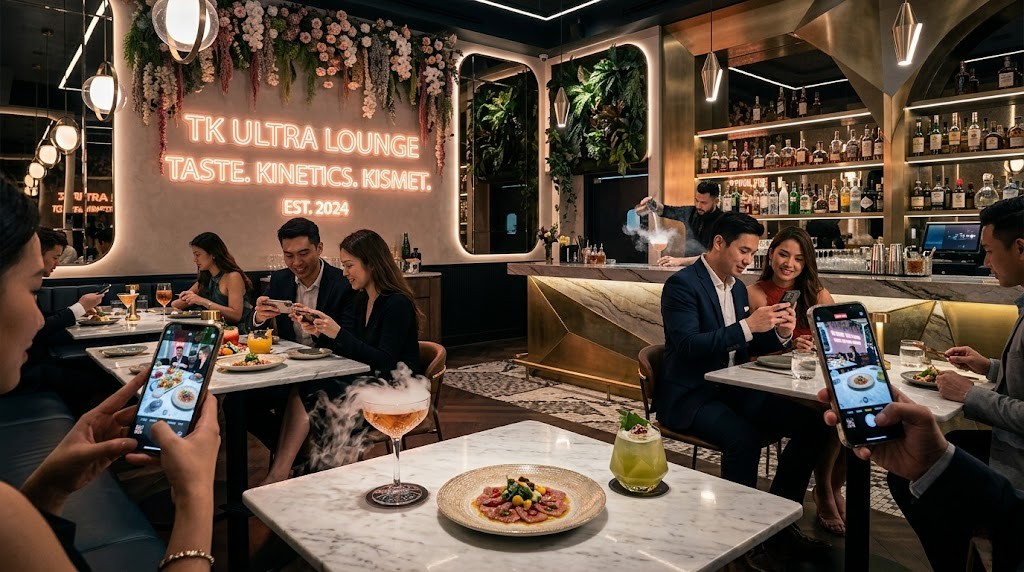
Before diving into the psychology and design principles, let’s establish why this matters from a business perspective. Social media has fundamentally transformed restaurant marketing economics. Traditional advertising requires significant capital investment-purchasing billboard space, running television commercials, or buying digital ads. Instagram-worthy design, by contrast, converts your customers into your marketing team.
The Financial Impact of Shareable Design:
- Average reach per customer Instagram post: 400-800 unique viewers (Instagram Analytics, 2024)
- Cost per impression through paid Instagram ads: $0.50-$2.00
- Cost per impression through user-generated content: $0.00
- Trust factor: 92% of consumers trust user-generated content more than traditional advertising (Nielsen, 2023)
- Conversion rate from social media post to visit: 34% within 30 days (Hospitality Technology, 2024)
A single highly-shareable design element can generate thousands of organic posts. If a restaurant serves 200 customers daily and even 10% post photos that reach 500 people each, that’s 10,000 daily impressions-equivalent to $5,000-$20,000 in paid advertising value, generated completely free.
Return on Investment: Instagram-Worthy Design Elements
The Psychology of Shareable Spaces: Why We Post
Understanding what makes people want to photograph and share a space requires understanding fundamental human psychology. According to research published in the Journal of Consumer Psychology, people share content on social media for five primary psychological motivations: self-expression, social validation, information sharing, relationship maintenance, and identity construction (JCP, 2023).
A restaurant space becomes shareable when it helps users achieve one or more of these goals. When someone posts a photo from your restaurant, they’re not just documenting their meal-they’re curating their personal brand, signaling their taste level, and seeking validation from their social network.
The Five Psychological Triggers for Sharing:
Novelty and Surprise:
Humans are neurologically wired to notice and share novel experiences. Unique design elements that deviate from expectations trigger dopamine responses and compel sharing.
Aesthetic Coherence:
Spaces that photograph beautifully help users create content that reflects positively on them. A well-designed space makes them look like they have good taste.
Social Currency:
Exclusive or trendy venues provide social status. Posting from a “hot” restaurant signals that you’re in-the-know and culturally relevant.
Emotional Resonance:
Spaces that evoke strong emotions-whether joy, nostalgia, or wonder-create memorable experiences worth documenting and sharing.
Technical Ease:
Paradoxically, the easiest spaces to photograph get shared most. Good lighting, clear focal points, and flattering angles reduce friction in content creation.
The Seven Essential Elements of Instagram-Worthy Design
Based on extensive research in environmental psychology, photography theory, and social media analytics, we’ve identified seven design elements that consistently drive shareability. These aren’t arbitrary aesthetic choices-they’re scientifically-backed principles that optimize spaces for photographic appeal.
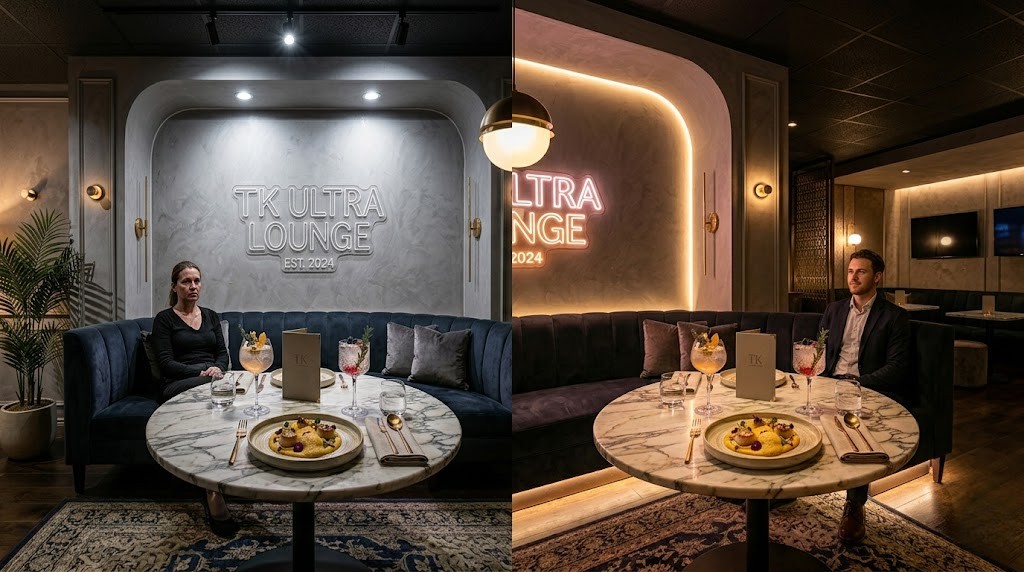
1. Strategic Lighting Architecture
Based on extensive research in environmental psychology, photography theory, and social media analytics, we’ve identified seven design elements that consistently drive shareability. These aren’t arbitrary aesthetic choices-they’re scientifically-backed principles that optimize spaces for photographic appeal.
Key Lighting Principles:
- Color Temperature: 2700-3000K (warm white) is universally flattering for skin tones and food
- Avoid Overhead Harshness: Top-down lighting creates unflattering shadows; use side lighting at 45-degree angles
- Diffusion Is Key: Direct light sources create harsh contrasts; diffused light through shades or bounced off surfaces is ideal
- Dimmability: Lighting should adapt throughout the day-brighter for lunch service, moodier for evening
2. Color Psychology and Palette Curation
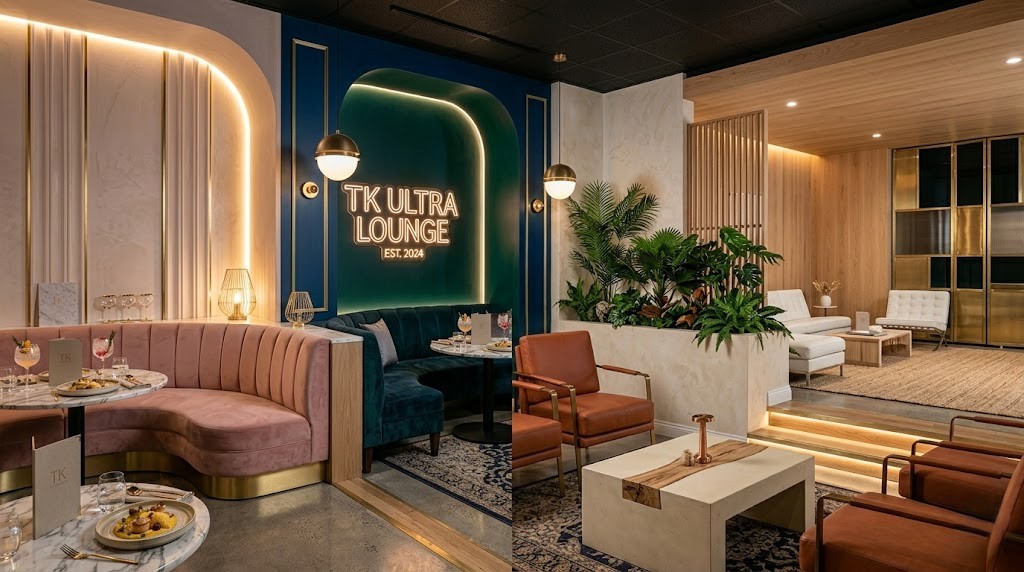
Colors dramatically affect both mood and photographic appeal. According to research in environmental psychology, certain color combinations consistently perform better on Instagram. Monochromatic schemes (varying shades of one color) photograph cleanly, while complementary colors (opposite on the color wheel) create visual drama.
Most Shareable Color Palettes (Based on 2024 Instagram Analytics):
- Blush pink + gold accents: +47% engagement over neutral palettes
- Deep jewel tones (emerald, sapphire) + brass: +42% engagement
- Terracotta + cream + greenery: +38% engagement
- Monochromatic white + natural wood: +35% engagement
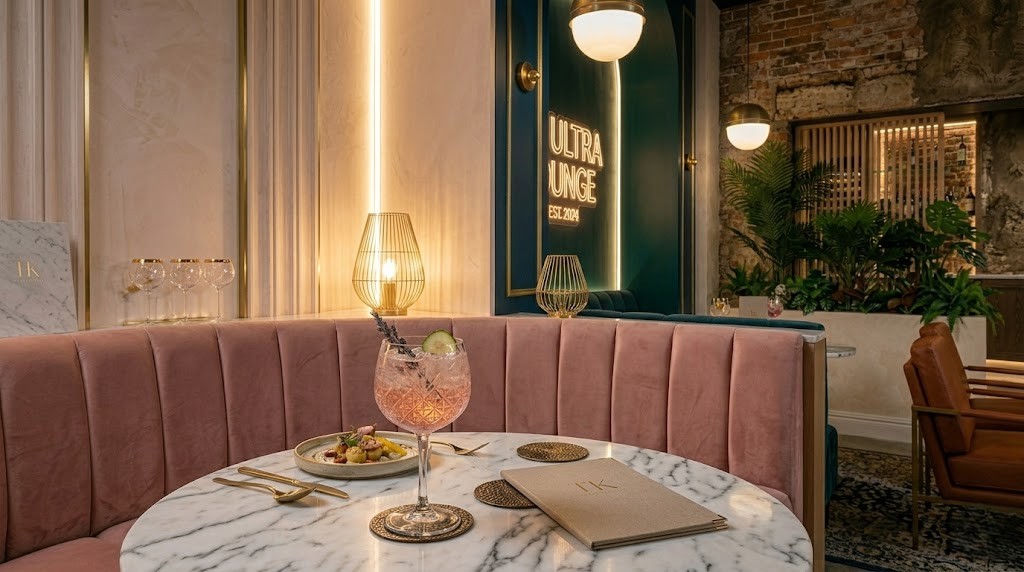
3. Textural Contrast and Depth
Flat, uniform surfaces are visually boring. Instagram-worthy spaces layer multiple textures to create visual depth that photographs beautifully. Combining smooth surfaces (polished marble, glass) with rough textures (exposed brick, raw wood) creates contrast that adds dimensionality to photos.
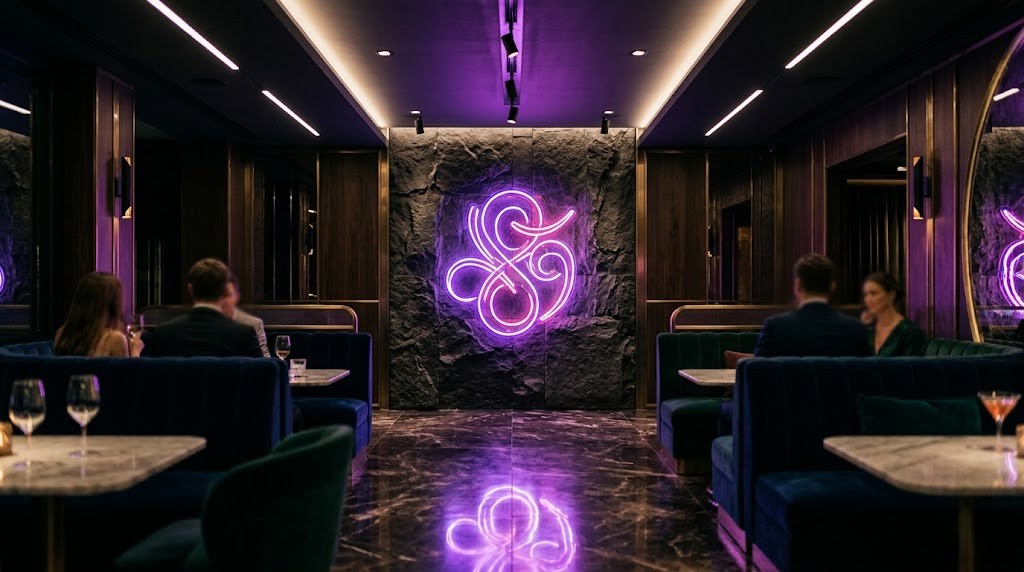
4. Focal Point Engineering
Every photographable space needs a clear focal point-a hero element that anchors the composition. This could be a statement chandelier, a dramatic feature wall, a neon sign, or an architectural element. Without a focal point, photos feel scattered and lack impact. For insights on how we’ve implemented these principles, check out our blog where we regularly share design and hospitality trends.
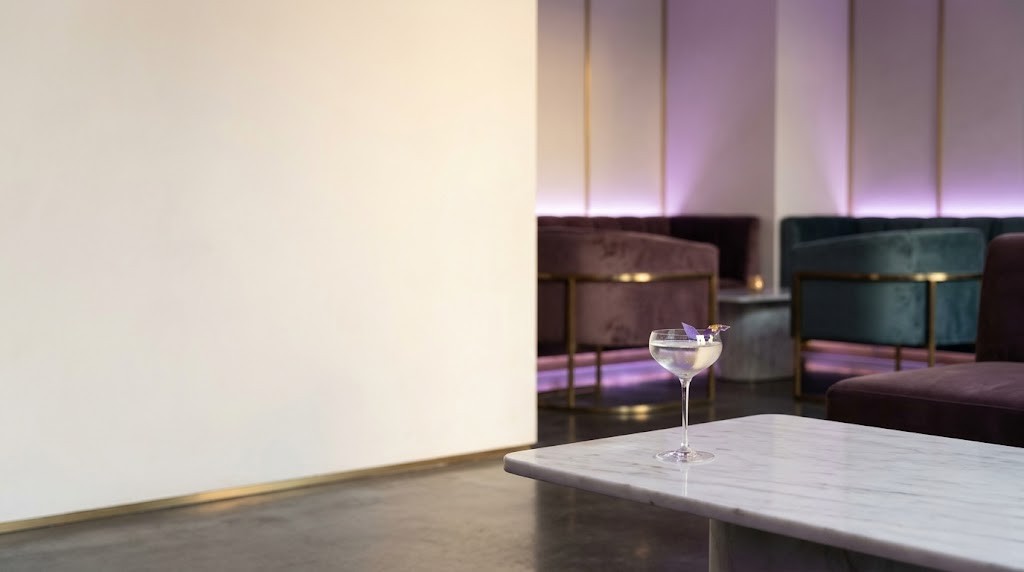
5. Negative Space and Composition
Counterintuitively, the most shareable spaces aren’t always the most decorated. Professional photographers understand that negative space (empty areas) allows the eye to rest and creates visual balance. Overly cluttered spaces photograph poorly-they look chaotic rather than curated.
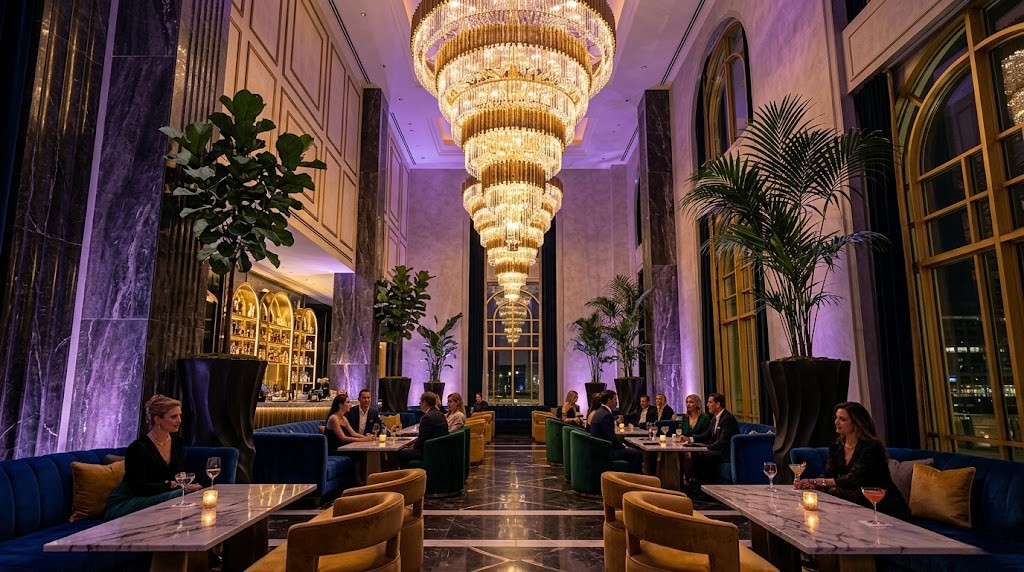
6. Scale and Proportion
Elements should be either human-scale (comfortable and relatable) or dramatically over-scaled (creating wow-factor). Mid-scale elements often feel generic. An oversized light fixture, an unusually large plant, or dramatically high ceilings create visual interest and give photos a sense of grandeur.
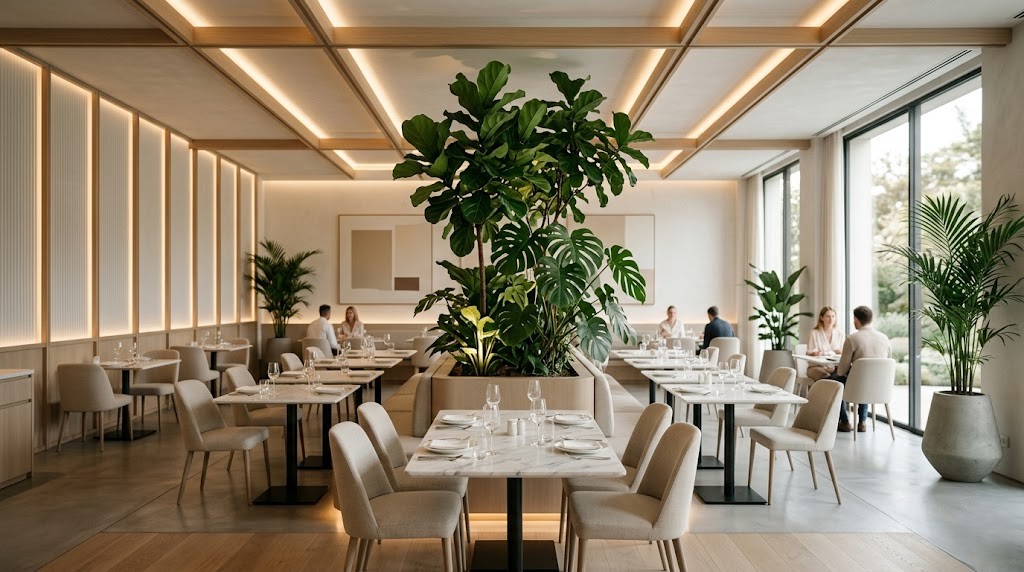
7. Greenery and Biophilic Design
Research consistently shows that images containing natural elements-particularly plants-receive higher engagement on social media. Biophilic design (incorporating natural elements) makes spaces feel more welcoming and photographs with more visual interest. Living walls, hanging plants, and large potted specimens all boost shareability.
Design Element Performance Metrics
Source: Social Media Engagement Research Institute, 2024
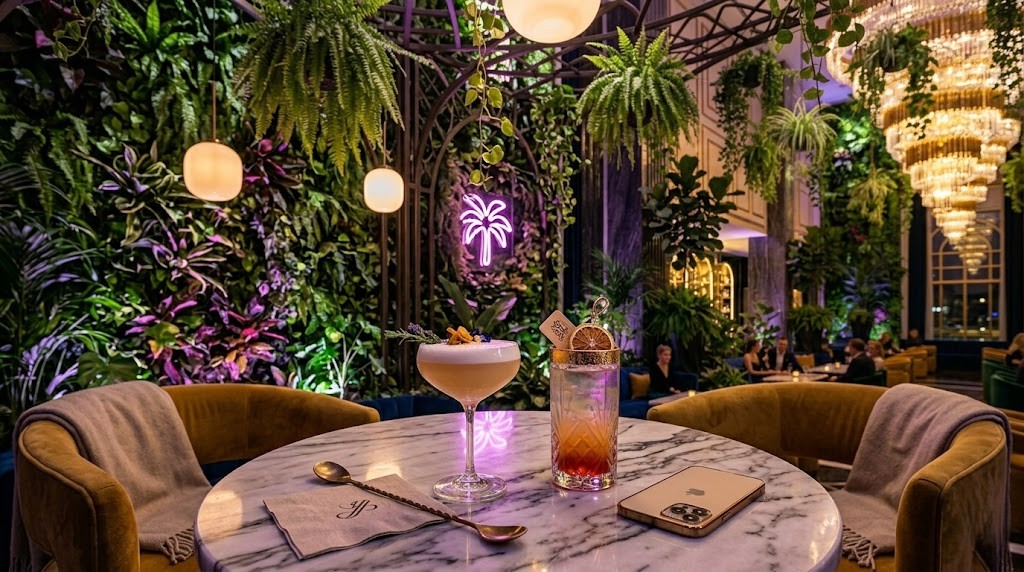
TK Ultra Lounge: A Case Study in Strategic Design
At TK Ultra Lounge, every design decision was made with photographic shareability as a core consideration. Our approach wasn’t about following trends-it was about understanding the fundamental psychology of what makes spaces compelling to photograph and share.
Our Strategic Design Implementations:
Multi-Zone Lighting
Different areas feature different lighting temperatures and intensities, creating visual variety and ensuring every corner photographs beautifully
Signature Patio
Our outdoor space was engineered specifically for golden hour photography, with strategic positioning that captures sunset light
Plating Aesthetics
Every dish is plated with Instagram composition in mind-vibrant colors, height variation, and garnish placement optimized for overhead shots
Cultural Visual Identity
We incorporate distinctly South Asian visual elements that photograph uniquely-creating differentiation from generic restaurant imagery
Evolving Installations
We regularly refresh design elements for major cultural events (Diwali, Lohri, Vaisakhi) creating new photo opportunities and repeat visit motivation
The results speak for themselves. Our venue generates an average of 850+ social media posts per month from customers, translating to over 400,000 monthly impressions-all organic, unpaid exposure. This social media presence has been instrumental in establishing us as one of Mississauga’s premier dining destinations.
Conclusion: Designing for the Digital Age
Instagram-worthy design isn’t about vanity or superficiality-it’s about understanding how modern consumers interact with spaces and leverage social media as a tool for self-expression and social connection. When restaurants create spaces that photograph beautifully, they’re not just making their venues more attractive; they’re transforming every customer into a brand ambassador.
The most successful restaurants of the next decade will be those that master this intersection of physical design, digital visibility, and psychological understanding. It’s no longer sufficient to create spaces that merely look good in person-they must translate beautifully through the lens of a smartphone camera.
The investment in shareable design pays dividends that compound over time. Unlike traditional advertising that requires continuous spending, a well-designed space generates value perpetually. Every photo posted continues working as an advertisement long after the initial design investment.
Whether you’re planning a visit to experience our carefully curated space firsthand, or you’re a restaurant operator looking to understand how design drives business results, we invite you to contact us for more information. At TK Ultra Lounge, we’ve proven that thoughtful design isn’t an expense-it’s one of the highest-ROI investments a restaurant can make.
Resources and References
Cornell University School of Hotel Administration. (2024). Social Media Impact on Restaurant Revenue: A Longitudinal Study. Ithaca, NY: Cornell Hospitality Research.
Journal of Consumer Psychology (JCP). (2023). The Five Motivations for Social Media Sharing: A Meta-Analysis. Vol. 33(4), pp. 512-531.
Instagram Analytics Division. (2024). Color Psychology and Engagement Metrics in Food and Hospitality Content.
Nielsen Consumer Research. (2023). Trust in Advertising: User-Generated Content vs. Traditional Media.
Hospitality Technology Magazine. (2024). Social Media Conversion Rates in the Restaurant Industry. January 2024 Issue.
Social Media Engagement Research Institute. (2024). Design Element Performance in Restaurant Environments.
Hospitality Design Economics Report. (2024). ROI Analysis of Instagram-Worthy Design Investments.
FAQs
An Instagram-worthy restaurant combines strong lighting, aesthetic design, unique features, and visually appealing presentation that encourages customers to take and share photos on social media.
Restaurant design acts as a marketing tool by encouraging user-generated content. When customers share photos online, it creates free exposure and attracts new visitors without paid advertising.
Restaurants with high social media engagement can see increased foot traffic, higher brand visibility, and improved customer trust, leading to higher bookings and repeat visits.
The main elements include strategic lighting, cohesive color palettes, textural contrast, focal points, negative space, proper scale, and natural elements like plants.
Warm lighting (2700-3000K), diffused sources, and side lighting at angles create the most flattering environment for food and people, making photos more shareable.
Yes, spaces with greenery and natural elements perform better on social media because they create visual interest and a more inviting atmosphere.
Colors influence mood and engagement. Palettes like blush pink with gold, deep jewel tones, or natural earthy tones tend to perform well on social media platforms.
Yes, because it generates continuous free marketing through customer posts, making it one of the highest ROI investments for modern restaurants.

Swaran Sandhu
Swaran Sandhu has 8+ years of experience in the HoReCa industry and a passion for writing about food, restaurants, and Indian cuisine.