
Table of Contents
This year, step into a world where ancient customs meet modern luxury. Welcome to TK Ultra Lounge: more than a restaurant, it’s a destination.
For decades, the South Asian dining experience in Canada existed in two distinct, often incompatible worlds. On one hand, there were traditional family restaurants—authentic in flavor, deeply rooted in cultural heritage, but often lacking in ambiance, modern aesthetics, and the experiential elements that today’s diners crave. On the other hand, downtown nightlife venues offered luxury, bottle service, and Instagram-worthy interiors, but rarely with any meaningful connection to South Asian culture or cuisine.
Enter the “Desi-Urban” movement—a revolutionary shift in how South Asian millennials and Gen Z consumers approach fine dining. This isn’t just a trend; it’s a cultural reckoning that’s reshaping the hospitality landscape across Canada, particularly in diverse metropolitan areas like the Greater Toronto Area (GTA), Vancouver, and Calgary. At TK Ultra Lounge, we’ve witnessed this transformation firsthand, positioning ourselves at the very heart of this cultural evolution.
The Cultural Evolution: From Compromise to Expectation
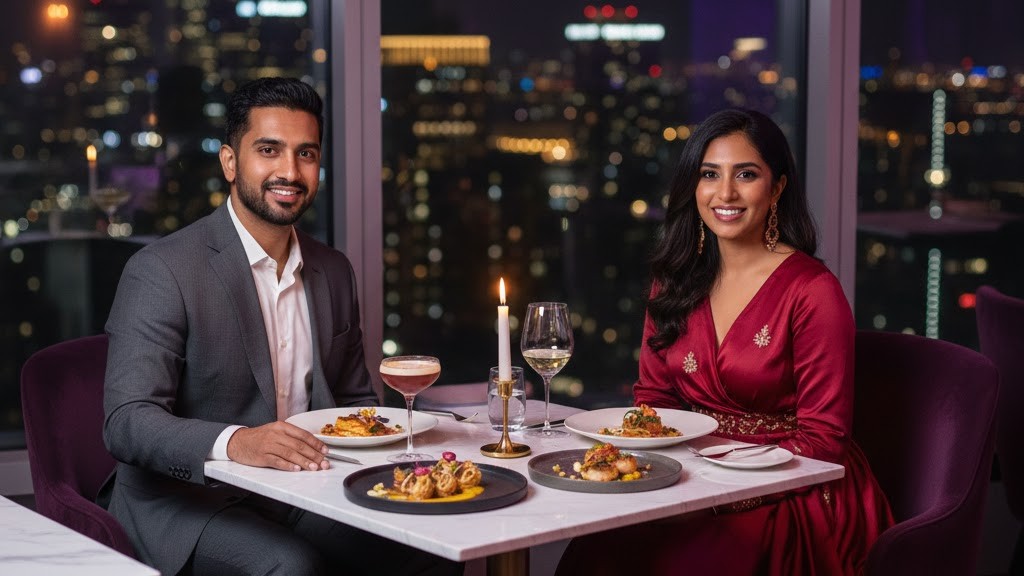
The first and second-generation South Asian diaspora in Canada has always maintained a unique relationship with food and hospitality. Our parents’ generation often prioritized authenticity above all else—seeking out hole-in-the-wall restaurants where the butter chicken tasted exactly like home, even if the décor was outdated and the service inconsistent.
Key Demographic Shifts:
- South Asians now represent 7.1% of Canada's total population (Statistics Canada, 2023)
- Concentrated heavily in GTA (37%), Vancouver (28%), and Calgary (15%)
- Median age of 32.7 years—significantly younger than Canadian average
- Average household income 18% higher than national median
- 86% of young South Asians (18-35) dine out at least twice weekly
Today’s South Asian consumers demand both authenticity and excellence. They want the Delhi-style butter chicken their grandmother made, but plated with Michelin-star precision. They crave live Qawwali performances, but in a venue with state-of-the-art acoustics and ambient lighting.
Traditional vs. Desi-Urban Dining: A Comparative Analysis
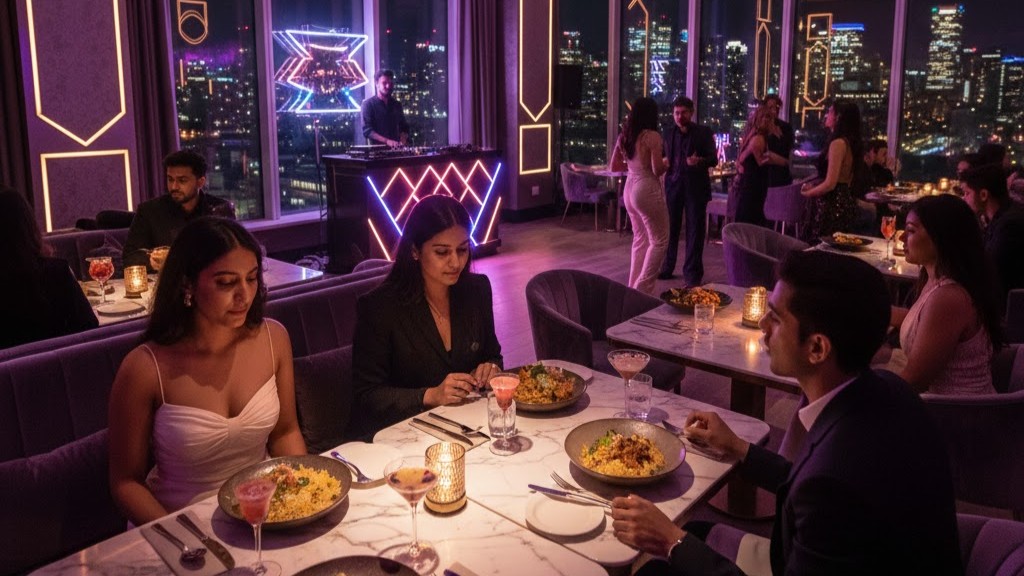
Defining the Desi-Urban Phenomenon
The term “Desi-Urban” perfectly encapsulates this cultural synthesis. “Desi”—a colloquial term derived from Sanskrit meaning “of the homeland”—represents the deep-rooted connection to South Asian heritage, food, music, and community values. “Urban” reflects the cosmopolitan, digital-native, aesthetically conscious lifestyle that defines modern metropolitan life.
The Desi-Urban experience is characterized by five core pillars:
Authentic Regional Cuisine with Modern Presentation:
Gone are the days of generic “Indian food.” Desi-Urban venues offer regionally specific dishes—from Hyderabadi Biryani to Peshawri Kadhai Goat—prepared with traditional techniques but presented with contemporary flair.
Sophisticated Ambiance Meets Cultural Comfort:
These spaces feature professional interior design, curated lighting, and Instagram-worthy aesthetics, while maintaining the warmth and inclusivity of a community gathering place.
Live Cultural Entertainment:
Rather than relegating South Asian music to background noise, Desi-Urban venues elevate it to center stage with live performances, DJ sets featuring Bollywood and Bhangra, and traditional arts like Qawwali.
Premium Service Without Pretension:
The dress code is “come as you are, but bring good energy”—a radical departure from the exclusionary dress codes of traditional fine dining.
Extended Operating Hours:
Understanding that South Asian social gatherings often extend late into the night, these venues maintain hours that accommodate this cultural norm rather than forcing it to conform.
What Millennials Really Want: Data-Driven Insights
Research from Restaurants Canada (2024) reveals that millennial and Gen Z diners prioritize experiential dining over transactional meals. For South Asian consumers specifically, this translates into several non-negotiables.
South Asian Millennial Dining Preferences (2024)
Source: Canadian Restaurant and Foodservices Association (CRFA), 2024
This data underscores a fundamental shift: authenticity and innovation are no longer mutually exclusive. Modern South Asian diners demand both, and they’re willing to pay a premium for venues that deliver this synthesis. For more insights on the modern dining experience, explore our blog where we regularly share industry trends and cultural insights.
The Business Case: Why Desi-Urban Venues Are Thriving
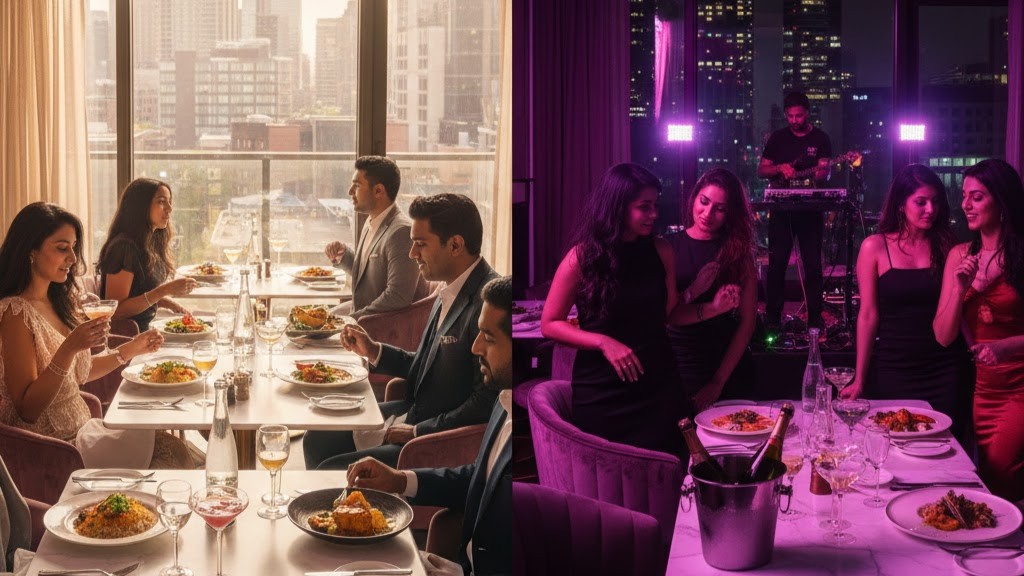
From a business perspective, the Desi-Urban model represents a sophisticated strategy for capturing maximum consumer spending across multiple dayparts and occasions. Traditional restaurants typically operate within a narrow window—opening for dinner service around 5 PM and closing by 10 or 11 PM. This model leaves enormous revenue potential on the table.
Revenue Optimization Through Multi-Daypart Operations:
Afternoon Service (2 PM - 5 PM):
Late lunch meetings, corporate gatherings, early family dinners
Prime Dining (5 PM - 10 PM):
Traditional fine dining service, high-margin food sales, family celebrations
Nightlife Transition (10 PM - 2 AM):
Premium beverage service, VIP bottle service, live entertainment, DJ sets
Late-Night Service (2 AM - 5 AM):
After-hours dining, underserved late-night market, minimal competition
Revenue Breakdown by Daypart: Desi-Urban Model
Source: Canadian Restaurant Trends Report, 2024
The private events segment provides an additional revenue stabilizer. By offering beautifully designed spaces suitable for weddings, corporate functions, and milestone celebrations, Desi-Urban venues create predictable, high-value bookings that offset the natural volatility of walk-in traffic. According to industry data, private events can contribute 30-40% of total revenue for well-positioned venues.
Cultural Validation and Community Building
Beyond the economics, the Desi-Urban movement represents something far more profound: cultural validation. For too long, South Asian consumers were made to feel that their cultural preferences were niche, their music too loud, their gatherings too large, their food too aromatic for “mainstream” fine dining establishments.
Key Elements of Cultural Authenticity:
- Organic celebrity endorsements (not paid promotions) validate the venue's authenticity
- Programming aligned with South Asian cultural calendar (Diwali, Lohri, Vaisakhi)
- Staff who understand nuances of South Asian hospitality and service expectations
- Menus that honor regional traditions without pandering or oversimplification
- Creating spaces where cultural expression is celebrated, not merely tolerated
This sense of belonging cannot be manufactured through marketing alone. It requires genuine understanding of the community’s values, celebrations, and social dynamics. The Desi-Urban venue becomes more than a restaurant—it becomes a cultural institution and a third space for the community.
The Future of Desi-Urban Dining
As we look toward the future, the Desi-Urban movement shows no signs of slowing. Demographic trends strongly favor its continued growth. The South Asian population in Canada is young, rapidly growing, and increasingly affluent. According to projections from Statistics Canada, visible minorities—particularly South Asians—will constitute an even larger share of the Canadian population over the next decade, with concentrated growth in major metropolitan areas.
More importantly, the expectations established by early Desi-Urban pioneers are becoming the baseline standard. Younger consumers who have grown up with access to these hybrid experiences will not accept a return to the false dichotomy of the past. They expect their local dining scene to reflect the sophistication, cultural pride, and experiential richness that define their own identities.
Conclusion: More Than a Trend
The rise of the Desi-Urban experience represents far more than a dining trend—it’s a fundamental shift in how multicultural communities assert their place in Canada’s hospitality landscape. South Asian millennials are not simply demanding better restaurants; they’re redefining what fine dining means in a diverse, modern Canada.
For consumers, this movement offers liberation from decades of compromise. You no longer need to choose between cultural authenticity and modern luxury, between neighborhood convenience and metropolitan sophistication. The Desi-Urban venue delivers all of these simultaneously, creating spaces where you can celebrate your heritage while living your contemporary lifestyle.
At TK Ultra Lounge, we’re proud to be part of this movement. Every element of our operation—from our extended 15-hour daily schedule to our live Qawwali nights, from our Delhi Wala Butter Chicken to our VIP bottle service—has been carefully engineered to honor this vision. We’re not just running a restaurant; we’re building a cultural home for a generation that refused to compromise.
Whether you’re planning a corporate dinner, celebrating a milestone, or simply seeking an authentic late-night meal after the clubs close, we invite you to experience the Desi-Urban difference. Contact us today to book your reservation or inquire about private events. Come as you are, but bring the energy—because this is your space, your culture, your celebration.
Resources and References
Statistics Canada. (2023). Diversity of the Population in Canada: Census Profile, 2021 Census. Retrieved from Statistics Canada official publications.
Canadian Restaurant and Foodservices Association (CRFA). (2024). Millennial Dining Preferences Survey: Cultural Authenticity and Innovation Trends.
Restaurants Canada. (2024). Experiential Dining Report: How Gen Z and Millennials Choose Restaurants.
Tourism Industry Association of Canada (TIAC). (2023). Social Media Impact on Dining Decisions: Instagram and Restaurant Selection.
Canadian Restaurant Trends Report. (2024). Private Events Revenue Analysis: Industry Benchmarks and Best Practices.
FAQs
Desi-Urban dining blends authentic South Asian cuisine and cultural elements with modern luxury, nightlife, and experiential hospitality. It combines traditional recipes, music, and community values with upscale ambiance, live entertainment, premium service, and extended hours.
Desi-Urban dining is growing because South Asian millennials and Gen Z consumers want more than just good food. They seek experiences that reflect their cultural identity while matching modern expectations for ambiance, nightlife, social media appeal, and premium service—especially in cities like Toronto, Vancouver, and Calgary.
Data shows that modern South Asian diners value experiential dining over transactional meals. They’re willing to pay a premium for venues that offer authenticity, live entertainment, social ambiance, convenience, and cultural validation—all in one place.
Desi-Urban venues operate across multiple dayparts—afternoon dining, prime dinner service, nightlife, and late-night food—maximizing revenue opportunities. High-margin beverage programs, live entertainment, and private events further boost profitability.
Desi-Urban dining represents a long-term cultural shift, not a passing trend. Demographic growth, rising incomes, and evolving expectations among South Asian Canadians mean this hybrid dining model is becoming the new standard, not the exception.

Swaran Sandhu
Swaran Sandhu has 8+ years of experience in the HoReCa industry and a passion for writing about food, restaurants, and Indian cuisine.